
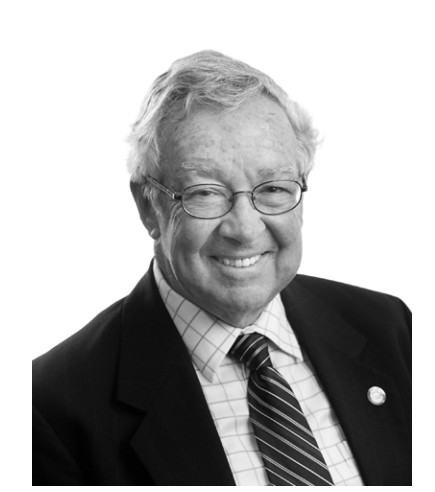
Michael Liddy spent much of his professional working life as a forensic scientist in Victoria and New South Wales. His area of expertise centered on toxicology, drug analysis and chemical drug ‘intelligence’ and he gave evidence at several royal commissions into drug misuse and drug abuse.
But after 35 years as a forensic scientist for Victoria Police and the NSW Health Department, his professional life took a different path in March this year when he was appointed Victorian president of the St Vincent de Paul Society, or the ‘Vinnies’ as they are more commonly known.
Mr Liddy said the society cares for the socially marginalised, the poor, the needy, the homeless, as well as asylum seekers, refugees and migrants. The organisation is structured from the bottom up, with many Catholic parishes having what they call Conferences “where the bulk of the work starts”. Apart from the much-publicised soup vans and blanket appeals, the society also runs breakfast and reading programs for school-aged children.
And while the ‘Vinnies’ stores and the 12,000 paid workers and volunteers have been a visible part of the Victorian landscape for many decades, perhaps less known is the important advocacy role St Vincent de Paul plays for people who are struggling to pay bills, including gas, electricity and water.
‘The current economic climate and the impact of the recent federal budget are not going to make it any easier at all for people on the margins of society … and they increasingly will turn to us and other organisations for assistance,’ said Mr Liddy.
‘We are very fortunate in Victoria to have a research and policy officer whose expertise is in energy pricing … and he’s been working with utility providers and state governments in south eastern Australia, looking at the way energy prices have been going up very significantly in recent years.
‘The impact on selected groups of disadvantaged people of increased energy prices on their very small household budgets is much more dramatic than on the average citizen. Having that understanding of the analysis of figures is helping us to advocate (and) to try and persuade the energy providers to have reasonable programs to deal with people who get behind in paying their bills.’
The soup vans and blanket appeals, said My Liddy, were still critical to the society’s work. Currently, there are five soup van operations and 10 vans servicing the state. ‘We have soup vans out every night. There’s no shortage of volunteers to help prepare and serve the meals. But it’s not just about serving the soup and the food,’ he said.
‘It’s talking to the people who come along. We have some people who the only time they speak to anyone during the week is when they come down to the soup van, one or two nights a week.
‘Sometimes the soup van goes into the high rise unit because we know where they are and we try and respect them and provide food. Talking to them is important to find out if there are other things that we can help them with. It’s an area we want to do more.
‘We have also had a lot of support for the blanket appeal and this year over 5000 blankets were donated. Those blankets go straight to the soup vans to be given out to the people they’re meeting with,’ said Mr Liddy who is an active member of the society’s Donvale Conference at the Our Lady of the Pines parish.
Mr Liddy said St Vincent de Paul continued to work with refugees and asylum seekers. ‘We have done a lot of work out in Broadmeadows and the western suburbs but also in Dandenong. We continue to support some of those people who have bridging visas but of course none of those visas are being granted at the moment,’ he said.
‘The society nationally has been advocating very strongly on behalf of refugees, asylum seekers and migrants. Some of the policies of the federal government I feel are somewhat lacking in social justice. We’re trying to get the ear of government and advocacy is one of our strengths that we work hard on.’
Another big challenge, said Mr Liddy, was to reinvigorate the society’s membership. ‘We are conscious of the fact we will need to keep making sure we can respond as best as we can in terms of the number members and volunteers who can assist people. Our members are getting older and we need to get younger people into the society so we can refresh with new ideas (and) new enthusiasm.’
 David B Ahern