

Pompeii’s sudden and violent destruction in 79AD has long held a fascination for many. The city was a vibrant seaport and important trading post for several centuries until Mount Vesuvius unleashed all the power it could muster one August day, reigning volcanic ash and pumice over Pompeii and nearby Herculaneum.
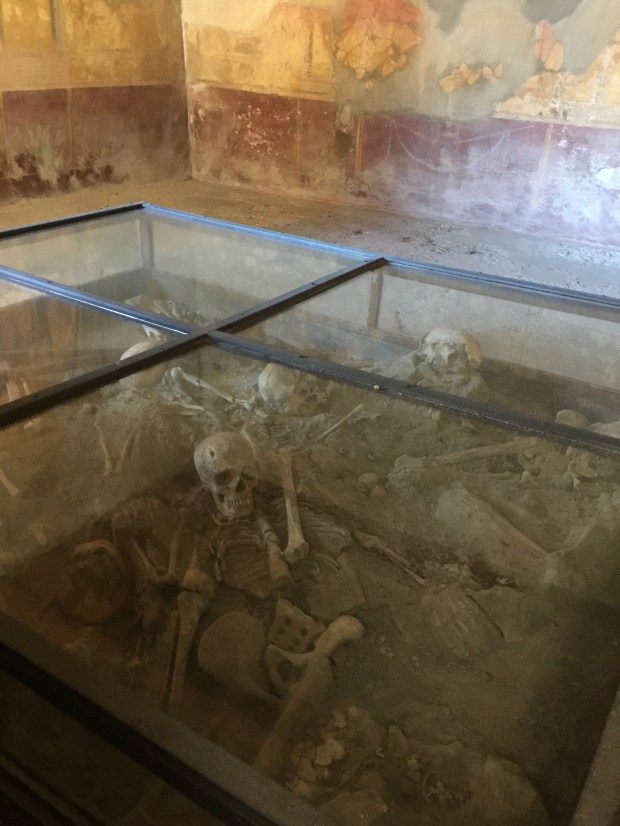
The unsuspecting inhabitants had little time to flee and many perished as they were going about their business. The bodies of the dead, some in crouching and lying positions protecting their faces, can be seen today.
The eruption happened at a time when Christianity was still all but unheard of in this part of the pagan world and the rule of the first Christian emperor in Rome, Constantine, was still several centuries away (306 to 337AD).
It’s believed the city located near modern day Naples was founded in the sixth or seventh century BC but only came under Rome’s domination in the fourth century BC and became a Roman colony in 80 BC. Pompeii, about 8 km from Mount Vesuvius, was home to about 11,000 people and covered up to 67 hectares.
Despite the hot and dry summers, Pompeii and its surrounds were fortunate to have very fertile soils. Archaeologists have excavated gardens and urban areas to reveal the predominant foods in Pompeii at the time.
A variety of crops were harvested and it’s believed much of the flat land in Campania, surrounding the areas of Pompeii, was dedicated to growing grain and wheat. Wine, olive oil, cereal, barley, wheat and millet were all produced in large quantities for local consumption and for export to other regions.
Part of the fascination with Pompeii centres on its extraordinary preservation after the devastating volcanic eruption. Pompeii was forgotten for many centuries until 1748 when the Spanish military engineer, Rocque Joaquin de Alcubierre, excavated the area.
More than 2.5 million people visit Pompeii each year, making it one of the world’s great tourist attractions. While many artefacts can be viewed onsite, a large number of relics are also housed in the Naples National Archaeological Museum, where some of the more erotic art work can be found.
The large number of well-preserved frescoes provide detail on everyday life 2000 years ago and some aspects of the culture were distinctly erotic, including use of the phallus as a good-luck charm in various types of decoration.
When King Francis visited the Pompeii exhibition with his wife and daughter in 1819, so embarrassed was he by the erotic artwork he ordered it be locked away in a so-called ‘secret cabinet’, a gallery within the museum that was only accessible to those of a more mature age.
Over 100 years this section was re-opened and closed a number of times. The Secret Museum was briefly made accessible again to the public at the end of the 1960s and was finally re-opened for viewing in 2000. Minors are still allowed entry but only in the presence of a guardian or with written permission.
 David B Ahern